Gluten-Free Pizza Night: Resetting a Shared Oven Between Bakes
If your pizza oven last cooked a gluten dough and you’re doing a gluten-free pizza night next, here’s what’s actually proven to help—and what’s a reasonable but unverified extrapolation from appliance science, not a clinical guarantee.
Gluten is a protein, not a germ — normal cooking heat doesn’t destroy it, which is why a loaf of bread baked at 220°C is still full of active gluten. But there’s a meaningful difference between cooking food and incinerating empty residue in an oven with no food in it. This guide covers practical steps for resetting a high-heat pizza oven before a gluten-free bake.
Prevent your screen from going dark as you follow along.
- 01
The two things that actually matter
1. Physical cleaning of porous surfaces — this is the established, non-negotiable step.
Pizza stones are porous. Flour and crumbs can work into the surface and aren't reliably removed by heat or wiping alone. The safest approach:
- Use a dedicated gluten-free stone, or
- Always bake gluten-free pizza on parchment or a perforated steel sheet so the dough never touches a stone that's previously had gluten dough on it
A reheat or burn-off is not a substitute for this — treat the stone as the thing you can't fully "reset" with heat alone.
- 02
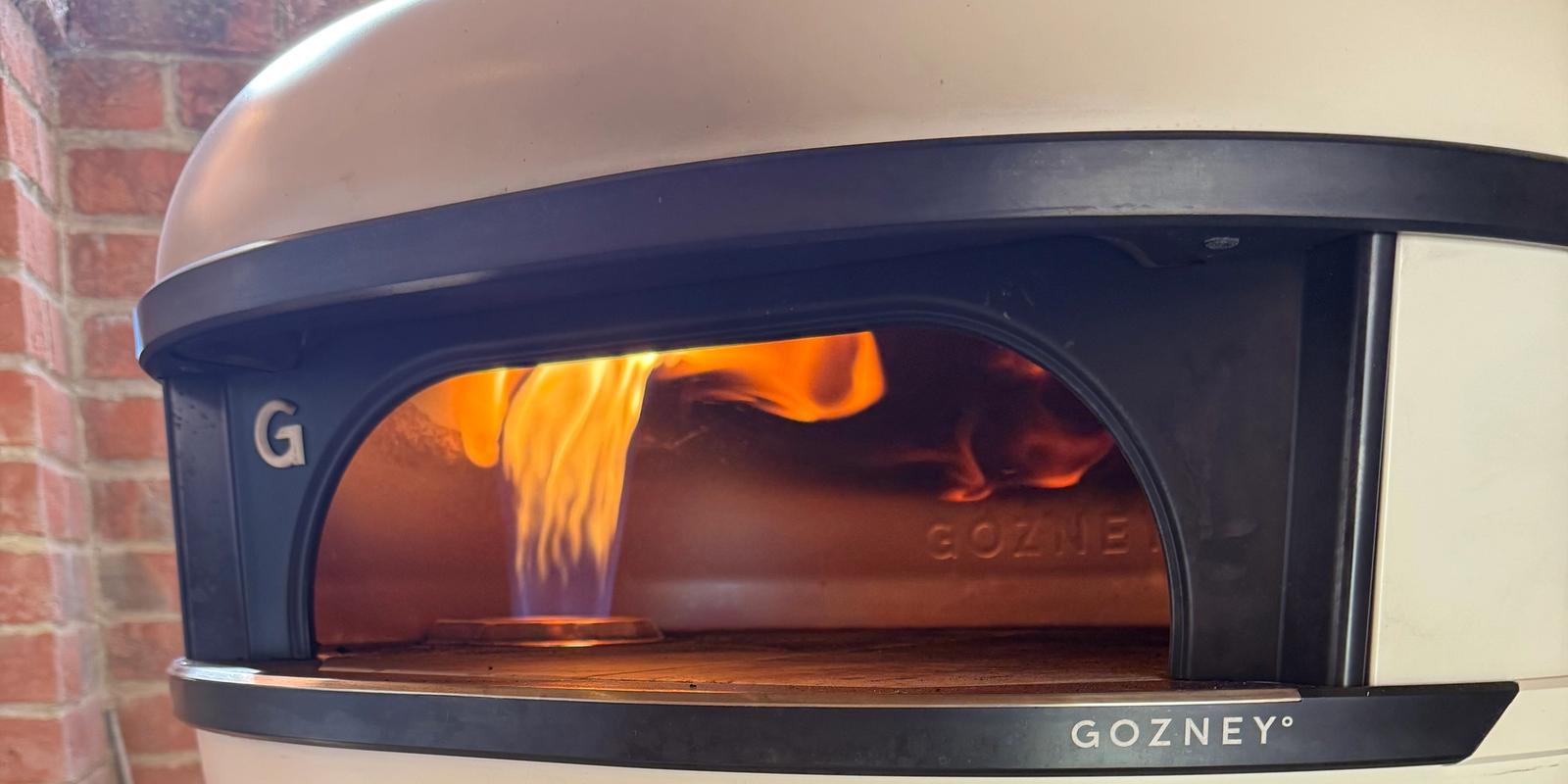
2. A high-heat burn-off — a reasonable practice, not a clinically tested one. If your oven reaches 500°C+ (Gozney, Ooni, and similar wood/gas-fired ovens), running it empty at full heat for 30–40 minutes after brushing out crumbs mirrors what a household pyrolytic self-cleaning oven does — those run at 400–500°C and turn food residue to ash through genuine combustion, not just surface sterilizing.
- 03
This is a sound, science-backed practice for exposed surfaces — the oven floor, dome, and stone face. It's a reasonable way to deal with crumbs and dust that heat can fully reach.
- 04
What we can't promise: no one has lab-tested this exact routine (a wood-fired pizza oven, 550°C, 30–40 minutes) for residual gluten in parts-per-million. We're extending well-established combustion science (how pyrolytic ovens work) to a similar but untested setup — not citing a study done on pizza ovens specifically. Treat it as a strong, well-reasoned practice, not a guarantee.
- 05
Suggested routine before a GF pizza night
- Brush and scrape out any visible crumbs or charred flour from the oven floor
- If your oven hits 500°C+, run it empty at full heat for 30–40 minutes with the door/flue open for airflow
- Use a dedicated GF stone, or bake on parchment/a perforated steel sheet
- Use a separate peel (or a freshly wiped one) and fresh corn meal (GF) for dusting — don't reuse the tub you used for the gluten dough
- Wash hands and wipe down the prep bench before shaping the GF dough
- 06
The bottom line
A hot burn-off is a genuinely useful step for surface residue, not a myth — but it's not a substitute for keeping porous surfaces (the stone in particular) dedicated or barriered. Combine both for the best outcome.